The Mesozoic Era lasts from 252 to 66 million years ago (Ma) and is split into the Triassic, Jurassic, and Cretaceous. Dates
here follow the broad international timescale; exact boundaries move slightly as stratigraphy improves.
Triassic Period (252–201 Ma)
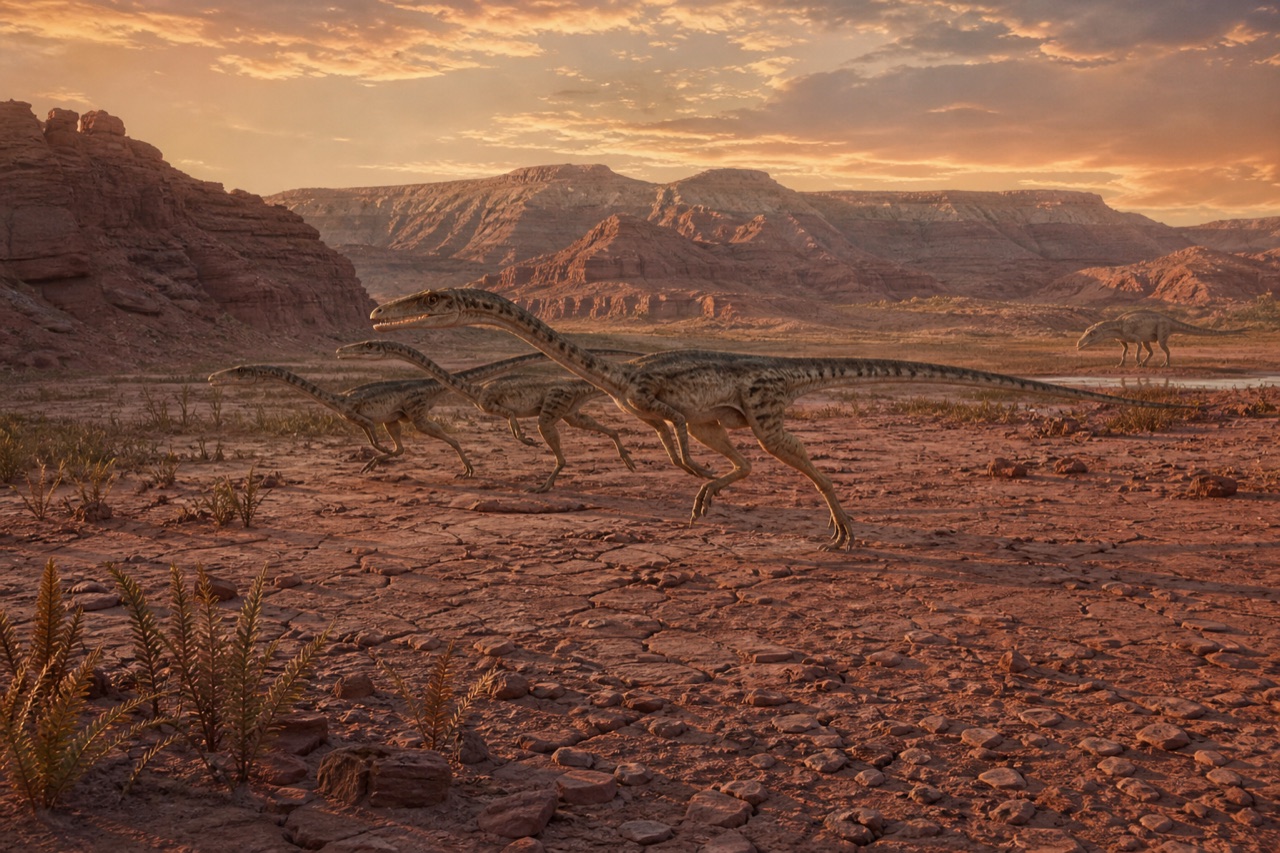
Life rebounded after the end-Permian mass extinction—the largest known die-off in Earth history. Early archosaurs diversified;
dinosaurs appear in the Middle–Late Triassic as part of a crowded landscape alongside relatives of crocodiles, mammal-like
reptiles, and other reptile groups. continents were still assembled as the supercontinent Pangaea, creating
vast interior deserts and strong seasonality in places.
Famous early dinosaurs include slender predators like Coelophysis and the bulky prosauropod Plateosaurus.
None yet reached the extreme sizes seen later.
Jurassic Period (201–145 Ma)
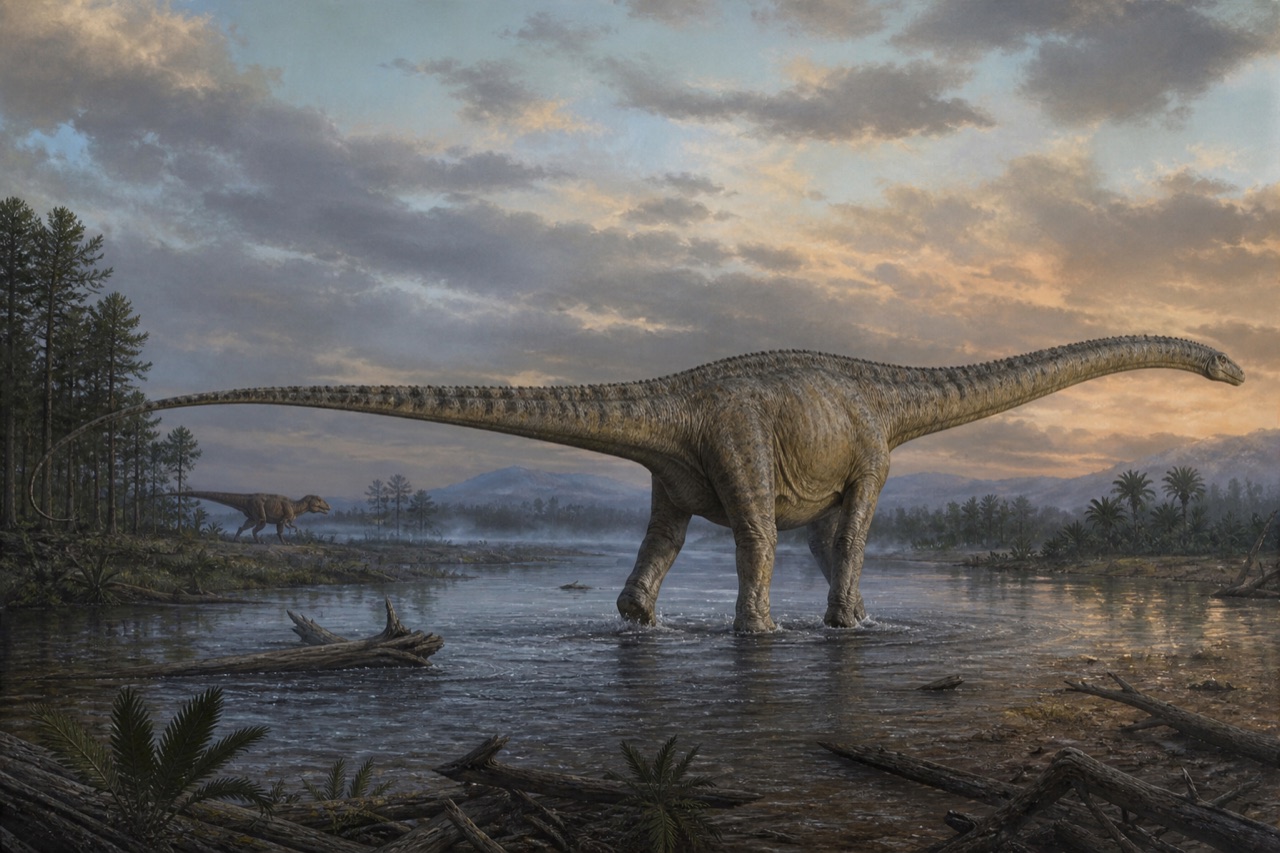
Pangaea began to rift. Sea levels rose; shallow seas spread over continental shelves. Forests of conifers, cycads, and ferns
dominated many landscapes. Sauropods reached enormous sizes in multiple lineages; stegosaurs radiated; allosaurs and related
predators occupied large-carnivore niches on several continents.
The Morrison Formation of western North America preserves a classic Late Jurassic fauna—Allosaurus, Diplodocus,
Stegosaurus, and more—while the Tendaguru beds in Tanzania and the Lourinhã Formation in Portugal offer windows into
other coastlines of the same world.
Cretaceous Period (145–66 Ma)
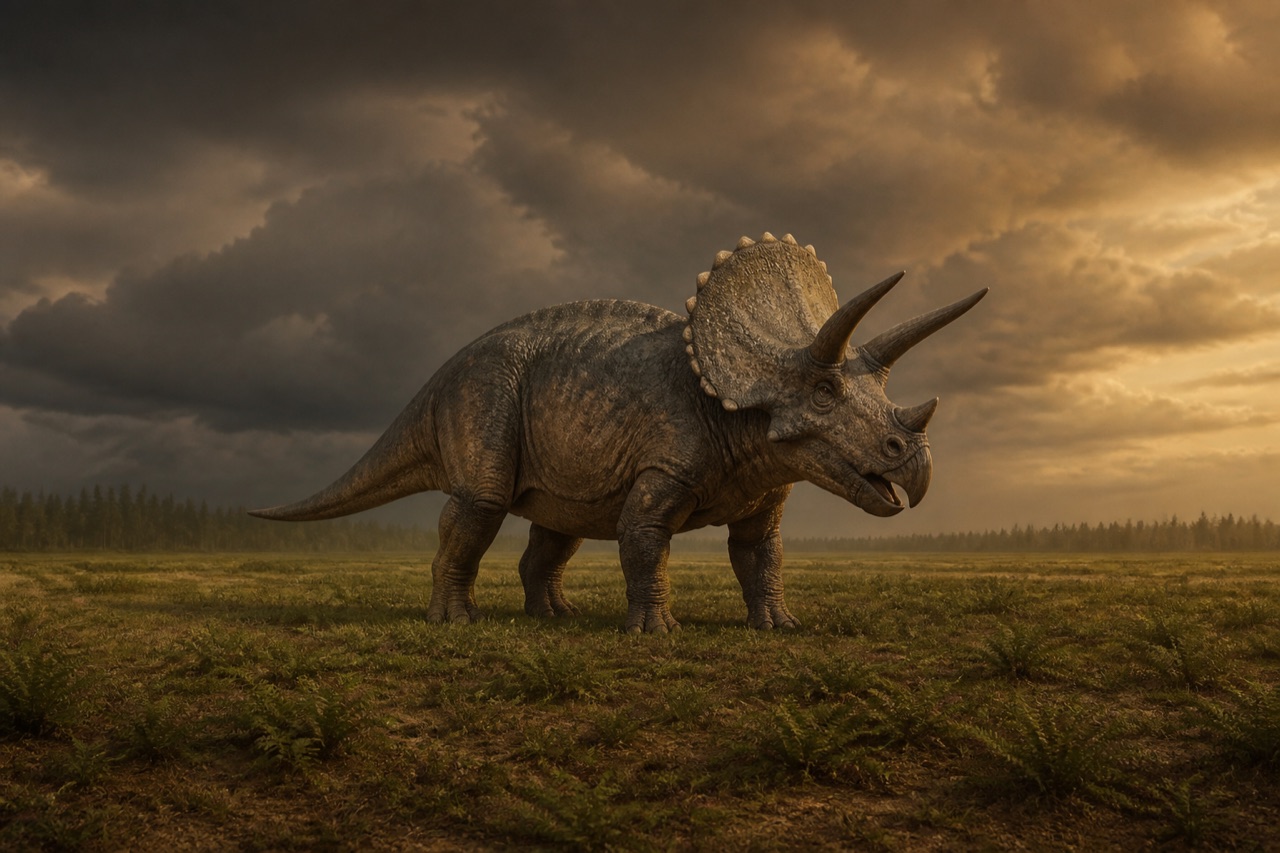
Flowering plants (angiosperms) spread and reshaped food webs. Continents drifted toward modern positions; rising interior seas
sometimes cut North America into eastern and western landmasses. Horned dinosaurs, hadrosaurs, tyrannosaurs, abelisaurids,
spinosaurids, and titanosaurs illustrate how regional isolation drove different “paleofaunas” on each continent.
The last few million years before 66 Ma include iconic North American species—Tyrannosaurus, Triceratops,
Ankylosaurus, Edmontosaurus—preserved in rocks that sit directly below the iridium-rich boundary clay of the
Cretaceous–Paleogene (K–Pg) event.
The Triassic, Jurassic and Cretaceous were not just labels on a timeline. Each period had its own geography, climate
structure, plant communities and evolutionary opportunities.
Period
World setting
Plants and food webs
Typical dinosaur stories
Triassic
Pangaea still dominated; climates were often hot, dry and strongly seasonal.
Ferns, horsetails and conifers were important, but landscapes were patchier and harsher than later lush Jurassic scenes.
Early dinosaurs were still sharing ecosystems with many other archosaurs. Small theropods and early sauropodomorphs begin to diversify.
Jurassic
Pangaea split into northern and southern landmasses; wetter climates spread across many regions.
Broad fern plains and conifer forests supported huge browsing herbivores.
Sauropods reached iconic giant size, stegosaurs spread, and large theropods became dominant terrestrial predators in many habitats.
Cretaceous
Continents drifted further apart and regional faunas became more distinct.
Flowering plants expanded, insects diversified and food webs became more modern-looking in structure.
Ceratopsians, hadrosaurs, tyrannosaurs, abelisaurids, spinosaurids and titanosaurs show strong regional evolutionary experiments.
Why the boundaries matter
The end of the Triassic saw a major extinction that removed many competitors and opened ecological space for dinosaurs. The
end of the Cretaceous marks the K–Pg event, when non-avian dinosaurs vanished and many ecosystems were reorganized.
Why continents matter
As landmasses separated, dinosaur lineages on different continents could evolve more independently. That is one reason Late
Cretaceous North America, South America and Asia can look so different in their large herbivores and predators.
Why plants matter
Dinosaur evolution is tied to vegetation. The spread of large fern plains and conifer forests helped sustain giant
herbivores, while flowering plants and new insect partnerships changed terrestrial ecosystems during the Cretaceous.
Why museum dates sometimes differ
Geological ages are refined as radiometric dating and stratigraphy improve. A page may round a range to keep it readable,
while papers can argue over narrower boundaries within the same formation.
Ecosystems Through Time
Thinking in terms of whole ecosystems helps more than memorizing dinosaur names in isolation.
Triassic ecosystems
Triassic worlds were often unstable, seasonal and shared among many competing archosaurs. Early dinosaurs were important,
but not yet obviously dominant everywhere. Small body size, fast movement and ecological flexibility mattered.
Jurassic ecosystems
In many Jurassic settings, giant herbivores shaped vegetation at landscape scale. Large predators followed that biomass,
and broad fern-conifer systems sustained some of the most famous fossil assemblages on Earth.
Cretaceous ecosystems
Cretaceous ecosystems often look more regionally specialized. Horned dinosaurs dominate some areas, giant titanosaurs
others; tyrannosaurs become iconic in the north, while abelisaurids dominate some southern continents.
Marine and flying reptiles
Dinosaurs were not alone. Pterosaurs ruled many aerial niches and marine reptiles dominated oceans in different intervals.
Keeping those groups separate helps avoid the common mistake of treating “Mesozoic animal” and “dinosaur” as synonyms.
Why is the Jurassic so famous?
Partly because formations like Morrison are spectacularly productive and partly because Jurassic body plans are visually
unforgettable: giant sauropods, stegosaurs and large theropods create a classic “dinosaur world” image that museums and
media have reinforced for generations.
Why does the Cretaceous feel more “modern”?
Flowering plants expanded, continents were closer to their present arrangement and many food webs began to resemble more
familiar ecological structures. It is still a very alien world, but some of its foundations look less archaic.
Did giant size evolve only once?
No. Sauropods repeatedly evolved enormous size in different lineages, and giant predatory theropods also appear in multiple
branches. Evolution kept returning to large body size because similar ecological opportunities arose in different places and
times.