Dinosaurs are archosaurs nested within reptiles. They are not pterosaurs (flying reptiles) or plesiosaurs (marine reptiles),
though all of them lived in the Mesozoic and are often mixed together in pop culture.
Definition in practice
In phylogenetic terms, Dinosauria is a branch of ornithodiran archosaurs. Members share a suite of hip,
ankle, and skull traits; the classic “hole in the hip socket” (perforate acetabulum) is one familiar hallmark. Birds sit
inside the theropod subgroup of dinosaurs, which means birds are dinosaurs by modern classification.
When people say “dinosaurs went extinct,” they usually mean non-avian dinosaurs—the spectacular Cretaceous
ecosystems of Tyrannosaurus, Triceratops, and their neighbors. Avian dinosaurs (birds) crossed the boundary
and diversified today into more than ten thousand living species.
Major dinosaur groups on this site
Theropods
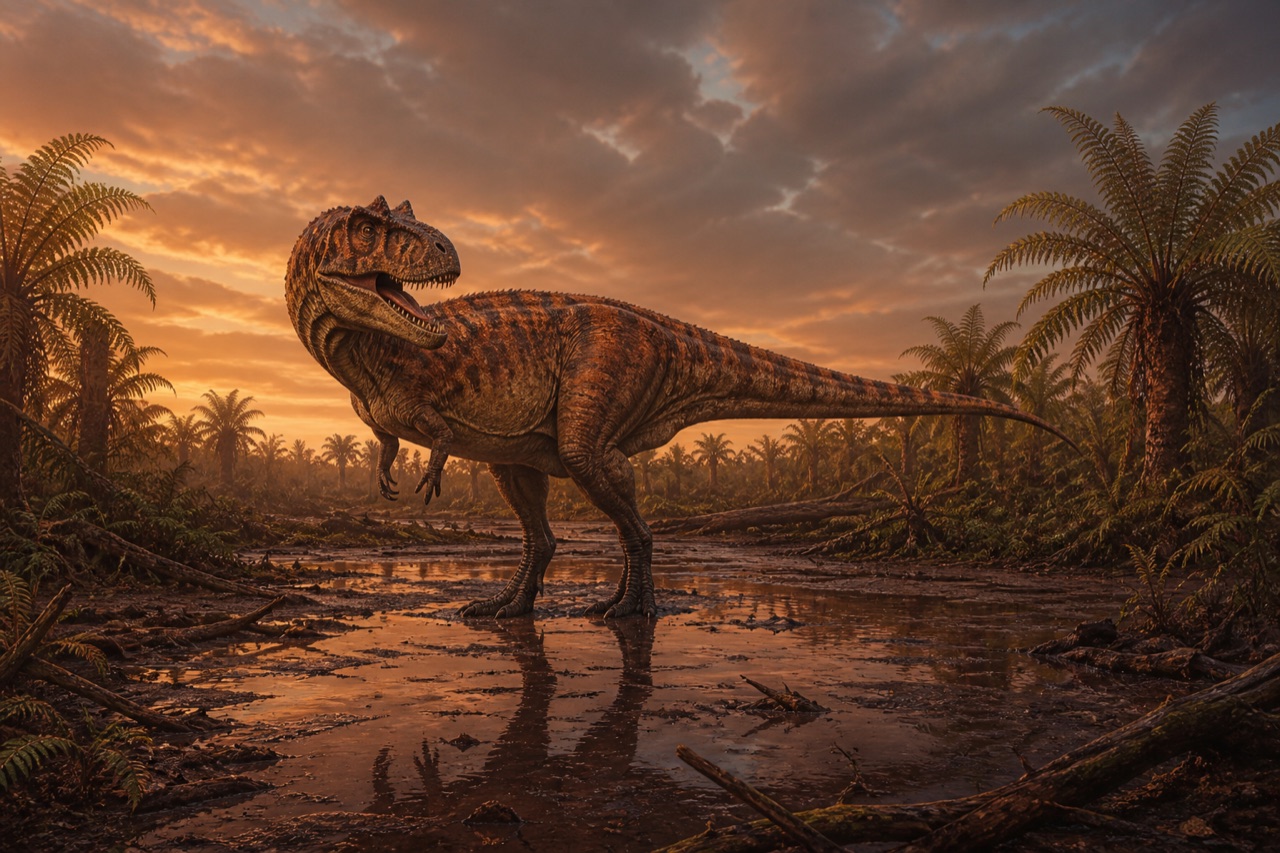
Mostly bipedal, typically three-toed trackmakers, with grasping hands in early forms. Includes everything from
Coelophysis to Tyrannosaurus, plus the lineage that leads to birds. Diets range from strict carnivory to
herbivory in oddballs like Therizinosaurus.
Sauropodomorphs
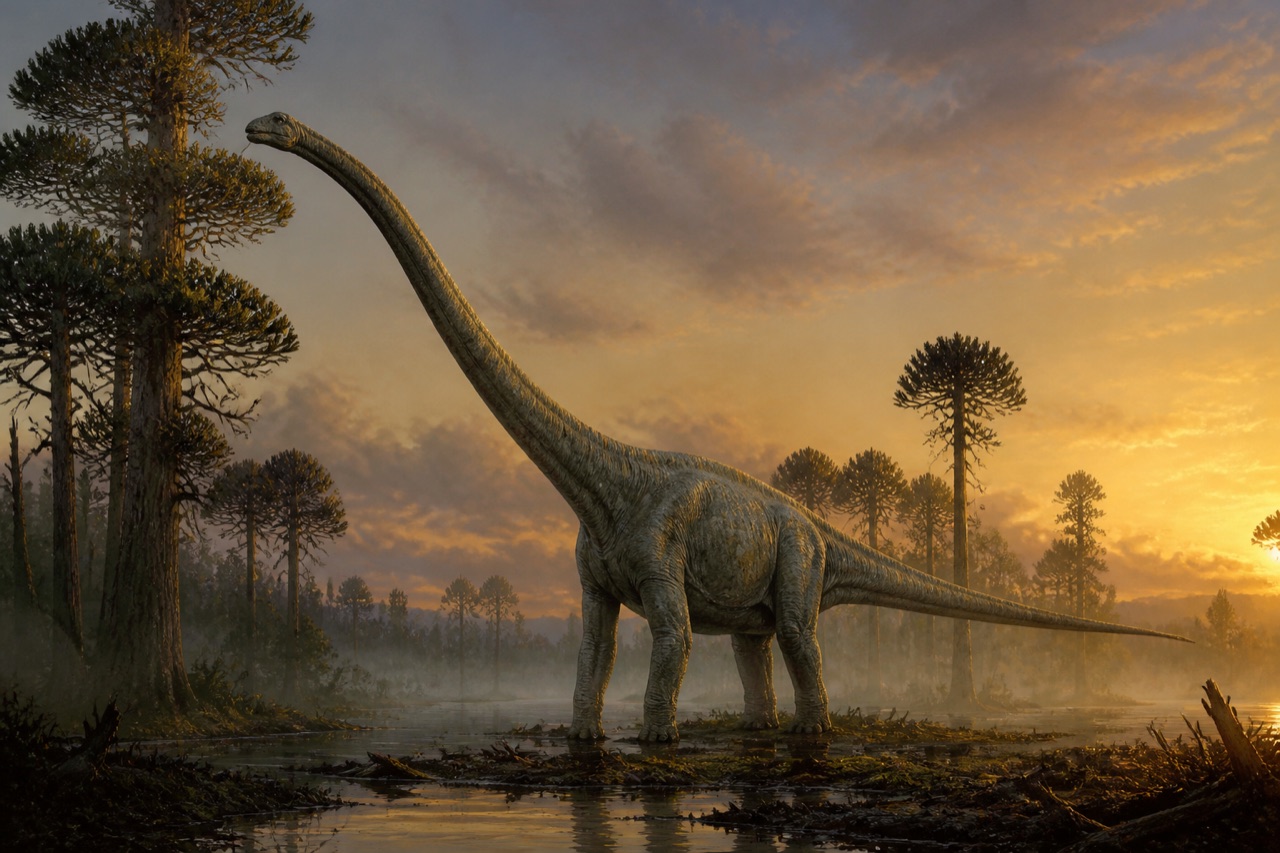
Long-necked plant eaters and their closer relatives, from bus-sized Triassic forms like Plateosaurus to Jurassic
giants such as Diplodocus and Brachiosaurus, and Cretaceous titanosaurs like Argentinosaurus.
Ornithischians
“Bird-hipped” dinosaurs that are not the ancestors of birds (the name is historical). Includes armored ankylosaurs,
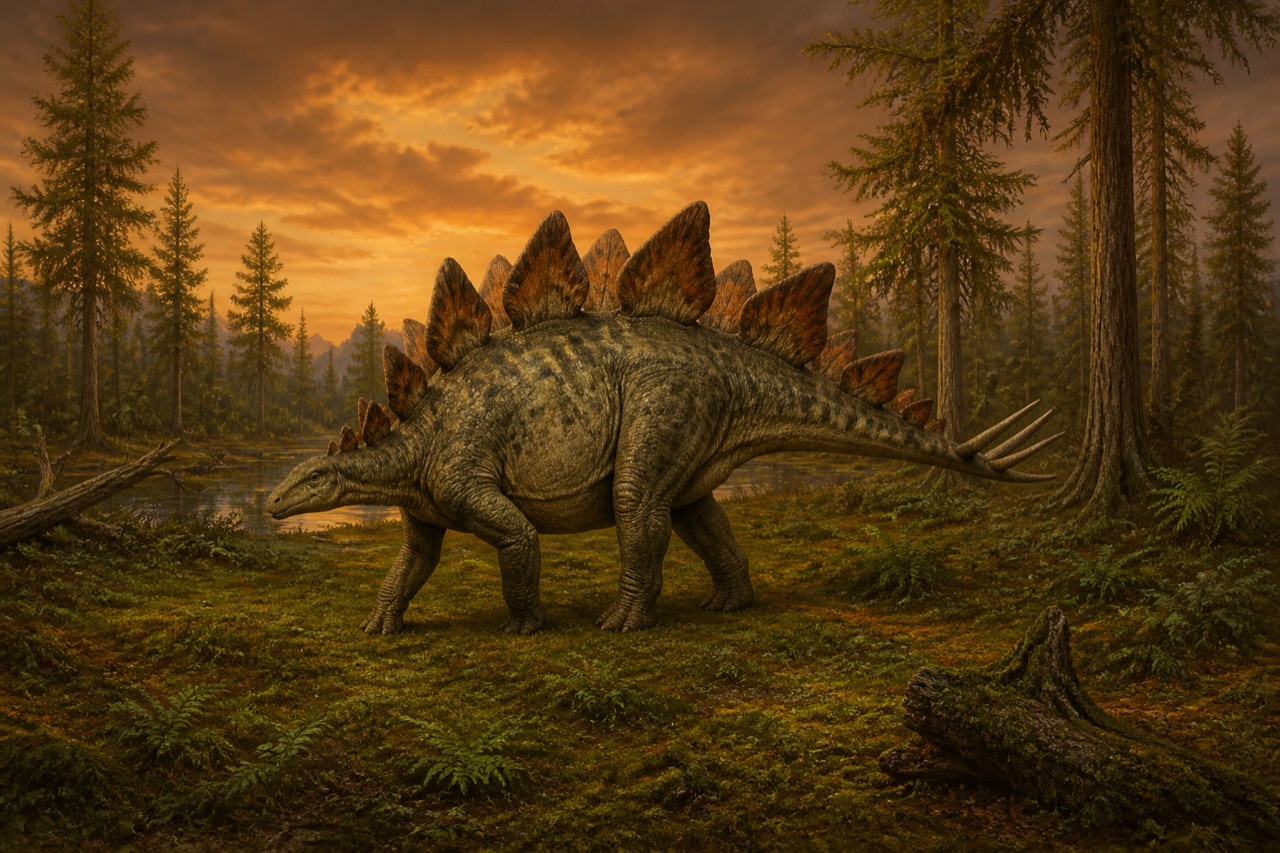
horned ceratopsians, dome-headed pachycephalosaurs, plated stegosaurs, and duck-billed hadrosauriforms. Many species sported
display structures—frills, crests, spikes—that help paleontologists infer behavior.
Museum and university sources agree on the broad picture: dinosaurs are defined by anatomy, evolutionary relationships and a
fossil record that preserves far more than just skeletons.
What makes a dinosaur
Dinosaurs are archosaurs with an upright stance and a distinct hip structure that helped bring the limbs under the body.
That posture is a big reason they are not simply “giant lizards.” Flying pterosaurs and marine reptiles lived in the same
broad age, but they were separate branches.
Why birds count
Modern birds descended from small feathered theropods. Features such as feathers, wishbones, air-filled bones and nesting
behavior are part of the evidence linking birds to dinosaur ancestors. The age of dinosaurs did not end completely—it
changed form.
How fossils become evidence
Paleontologists use body fossils such as bones and teeth, but also trace fossils: footprints, nests, eggs, coprolites and
bite marks. CT scans, thin sections, biomechanics and comparisons with living animals help turn those traces into testable
ideas about growth, movement and diet.
Why the record is incomplete
Some time intervals and environments preserve fossils far better than others. That is one reason Late Cretaceous dinosaurs
are often better known than Middle Jurassic ones. The fossil record is rich, but it is not an even sample of all ancient
life.
Common Mix-Ups
Not every prehistoric reptile was a dinosaur. Pterosaurs flew, plesiosaurs and mosasaurs swam, and
synapsids such as Dimetrodon lived before dinosaurs rose to dominance.
Not every famous dinosaur shared the same world.Stegosaurus lived long before
Tyrannosaurus, and different continents often hosted different faunas at the same time.
Useful Terms
Genus: a named group such as Triceratops or Allosaurus.
Formation: a rock unit, often the practical context in which fossils are discovered and compared.
Trace fossil: evidence of activity rather than body parts, such as footprints or nests.
Ma: million years ago, the shorthand used throughout this site.
Dinosaur FAQ
These are some of the questions that come up most often when people move beyond the movie version of dinosaur history.
Were dinosaurs warm-blooded?
The old cold-blooded-versus-warm-blooded split is too simple. Growth rates, bone structure, active lifestyles and bird
ancestry all suggest that many dinosaurs had relatively high metabolisms compared with modern reptiles. Different groups
may also have managed body temperature in different ways.
Did they all have feathers?
No. Strong feather evidence is concentrated in parts of the theropod tree, especially closer to birds. Many ornithischians
and armored dinosaurs are instead known from scales or other skin impressions. The exact distribution of feathers is still
an active research topic.
How do scientists know dinosaur colors?
Most dinosaur color schemes remain uncertain, but some exceptional fossils preserve microscopic structures linked to pigment.
These do not magically reveal the full palette of all dinosaurs, but they show that color and pattern can sometimes be
inferred in a limited, evidence-based way.
Were they smart?
“Smart” depends on comparison. Some theropods had relatively enlarged sensory systems and agile lifestyles, but dinosaur
intelligence varied widely across the group. It is usually more useful to ask what an animal was adapted to do than to rank
it on a single human-style intelligence scale.
How fast could they move?
Speed estimates combine limb proportions, muscle reconstructions, biomechanics and trackways. Small and medium theropods
could be fast and agile, while giant forms were constrained by mass. Some famous maximum-speed claims are more speculative
than popular media makes them sound.
How do names change?
Dinosaur names can shift when new fossils show that specimens were misassigned, when growth stages were mistaken for
different taxa, or when better phylogenetic analyses change relationships. Taxonomy is not random churn: it reflects better
comparisons and better evidence.